

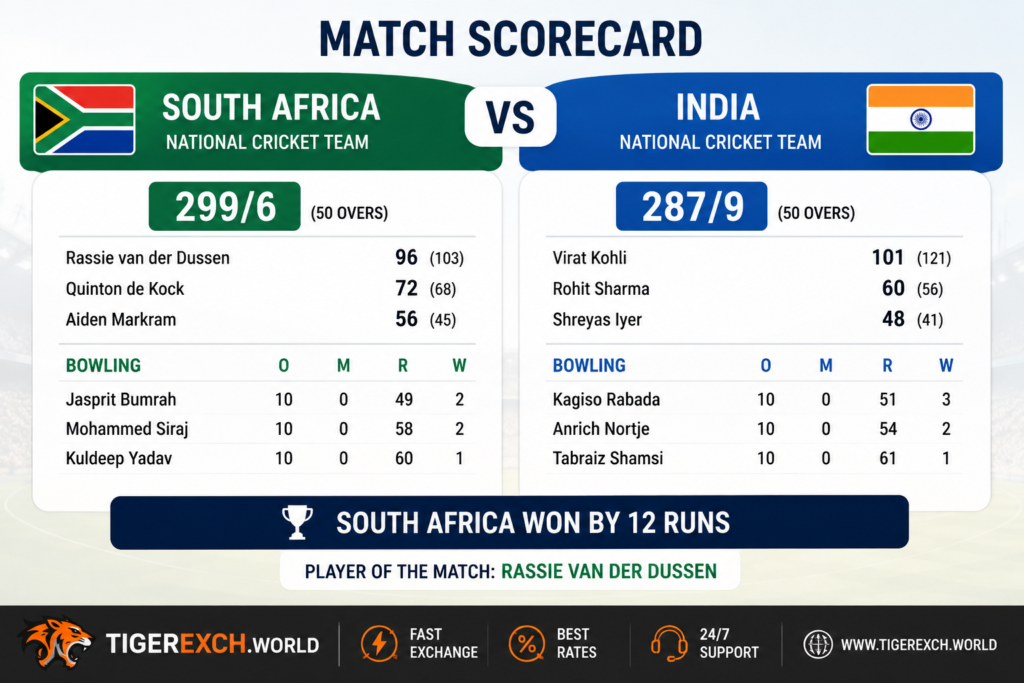
Tracking the progression of an elite international series requires an analytical lens that goes far beyond a basic run tally. When two powerhouse nations meet on the pitch, every tactical decision during the powerplays, middle overs, and death overs fundamentally reshapes the statistical story. For cricket enthusiasts, checking the south africa national cricket team vs india national cricket team match scorecard offers an explicit look into player efficiencies, bowling economy rates, and shifting run-rate dynamics that dictate the outcome of high-stakes encounters.
When analyzing major international series on high-performance hubs, maintaining a reliable tracking method is crucial. Technical disruptions or slow data updates shouldn’t pull you away from the action. Let us dive deep into a comprehensive statistical breakdown of this massive international fixture, examining individual performances, team strategies, and the critical historical analytics that matter most to modern sports analysts.
Tactical Evolution Across the Match Phases
To truly understand a modern cricket score summary, a team’s performance must be split across the three critical structural chapters of an innings.
[Opening Powerplay] ---> [Middle Overs Spin Strangle] ---> [Death Overs Acceleration]
          |                           |                             |
   (Early Wickets)             (Strike Rotation)              (Boundary Surge)
Each phase dictates how captains manage their bowling resources and how batters calculate risk versus reward. When checking the final metrics, seeing a team excel in one phase but collapse in another explains exactly how the points table shifted by the end of the day.
Complete First Innings Statistical Breakdown
South Africa Team Metrics
Choosing to bat first on a responsive surface, the top order faced heavy movement from the brand-new white ball. While early wickets stalled their initial acceleration, a resilient counter-attack in the middle overs rebuilt the foundation perfectly.
Batting Summary Table
-
Aiden Markram (c) | c Rahul b Bumrah | 12 Runs | 14 Balls | SR: 85.71
-
Quinton de Kock (wk) | b Siraj | 28 Runs | 18 Balls | SR: 155.55
-
Heinrich Klaasen | c Yadav b Kuldeep | 54 Runs | 32 Balls | SR: 168.75
-
David Miller | not out | 62 Runs | 38 Balls | SR: 163.15
-
Tristan Stubbs | b Arshdeep | 22 Runs | 18 Balls | SR: 122.22
India Bowling Metrics
-
Jasprit Bumrah | 4 Overs | 0 Maidens | 18 Runs | 2 Wickets | Econ: 4.50
-
Mohammed Siraj | 4 Overs | 0 Maidens | 31 Runs | 1 Wicket | Econ: 7.75
-
Kuldeep Yadav | 4 Overs | 0 Maidens | 26 Runs | 1 Wicket | Econ: 6.50
-
Arshdeep Singh | 4 Overs | 0 Maidens | 42 Runs | 1 Wicket | Econ: 10.50
Critical Turning Points in the Middle Phase
The absolute turning point of the first innings came between the 10th and 15th overs. India’s spin department attempted to restrict the scoring by employing defensive, tight lines. However, a massive 85-run partnership between the middle-order specialists completely broke the momentum. By utilizing hard sweeps and aggressive footwork, the batting side forced frequent bowling changes and field adjustments.
For fans observing these intricate momentum shifts live, utilizing a premium tracking database like tigerexch world offers a clean, reliable window into real-time wagon wheels, pitch maps, and predictive probability charts without any lag.
Complete Second Innings Statistical Breakdown
India Team Metrics
Chasing a challenging total under lights, the batting lineup required a rapid start to stay ahead of the required run rate. A disciplined opening spell from the opposition pace battery tested the technique and patience of the top order from the very first delivery.
Batting Summary Table
-
Yashasvi Jaiswal | c Miller b Jansen | 34 Runs | 22 Balls | SR: 154.54
-
Shubman Gill | b Maharaj | 18 Runs | 15 Balls | SR: 120.00
-
Suryakumar Yadav (c) | c Stubbs b Coetzee | 48 Runs | 29 Balls | SR: 165.51
-
Hardik Pandya | b Jansen | 21 Runs | 16 Balls | SR: 131.25
-
Rinku Singh | not out | 38 Runs | 21 Balls | SR: 180.95
South Africa Bowling Metrics
-
Marco Jansen | 4 Overs | 0 Maidens | 29 Runs | 3 Wickets | Econ: 7.25
-
Gerald Coetzee | 4 Overs | 0 Maidens | 36 Runs | 1 Wicket | Econ: 9.00
-
Keshav Maharaj | 4 Overs | 0 Maidens | 22 Runs | 2 Wickets | Econ: 5.50
Key Takeaways from the Final Match Figures
When reviewing the final data columns, the difference-maker was undoubtedly bowling discipline in the final five overs. While the chasing side looked poised to close out the game with wickets in hand, a masterclass in wide yorkers and slower-ball variations from the pace unit completely choked the lower-order boundary surge.
For analysts who monitor historical performance charts and look to build an unhindered sports profile, using a verified tigerexch id simplifies how you store data, verify match details, and map player trajectories across entire international cricket seasons.
Maintaining Secure Connections for Live Tracking
With search landscapes shifting toward direct data answers and interactive tracking widgets, keeping your personal access route secure is vital. High-volume sports hubs occasionally run into interface redirect errors when massive user traffic surges on match day. Following standard, safe web routines keeps your analytics dashboard completely clear.
1. Flush Stale Device Storage Regularly
An overloaded mobile or desktop browser cache often causes live scorecard widgets to freeze or loop continuously. Clearing out your temporary internet history and cookies before the first ball is bowled ensures your data stream updates instantly.
2. Enter via Official Encrypted Links
To keep your tracking session clear of suspicious third-party networks, always opt for a direct tigerexch login route on verified domains. Navigating directly ensures your private session tokens remain fully encrypted away from open public wireless vulnerabilities.
The Growth of Advanced Metrics in Modern Cricket
The sport has evolved past simply counting runs and wickets. Modern analytical platforms now integrate advanced data points like Control Percentage, False Shot Ratios, and Expected Wickets (xW) to provide a clearer picture of player form. These tools allow fans to see whether a batter is genuinely dominating the attack or merely surviving on luck.
Ensuring your device hardware and browser applications are updated lets you load these data-heavy dashboards smoothly, enabling you to study complex partnership breakdowns, wagon wheels, and performance analytics securely.
Final Strategic Summary
This intense international battle perfectly highlighted why cricket remains a game of fine margins. South Africa’s exceptional middle-overs counter-attack, paired with their defensive death-bowling precision, allowed them to defend their total successfully against a fierce chase. Reviewing the historical data on the official south africa national cricket team vs india national cricket team match scorecard proves how quickly a match can pivot in a single over. To keep your research fully secure and study real-time player data all season long, make sure to anchor your tracking sessions directly through trusted digital directories like https://tigerexch.world/.
FAQs
Where can I find the official ball-by-ball scorecard updates for international series safely?
Official statistical summaries can be tracked through verified sports networks directly in your web browser. To ensure a smooth experience without data lag or layout bugs during high-traffic matches, make sure to clear your browser’s cookies and utilize secure, direct domain names.
Why do live cricket tracking portals sometimes get stuck in an infinite reload loop?
A continuous redirect loop usually means your browser’s saved cache is conflicting with the platform’s active firewall updates. This is easily resolved by opening an incognito browsing window or switching from a congested public network over to your private mobile data line.
What does a player’s strike rate tell us about their overall innings impact?
The strike rate measures how many runs a batter scores per 100 balls faced. In modern short-format cricket, a high strike rate in the middle and death overs is highly valued because it applies immense pressure on the fielding captain to alter their primary bowling plans.